human-capital-trends/2017/digital-transformation-in-hr.html
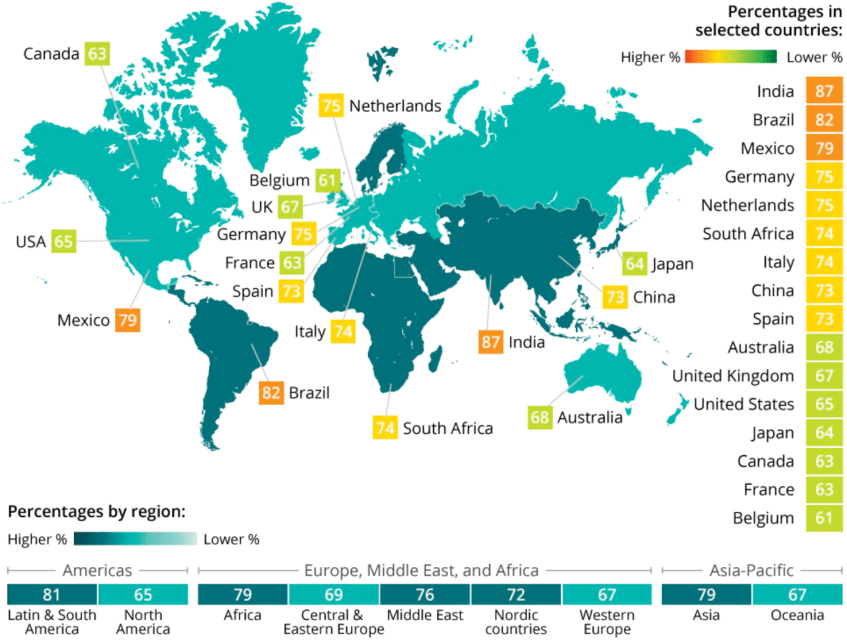
In their related article of 2017 Global Human Capital Trends, Deloitte outlines that in 16 countries surveyed, the percentage of respondents who rated digital HR trends as important or very important ranged from a minimum of 61% to a maximum of 87%. This is because digital disruption helps HR have higher data quality and production efficiency and greatly reduce communication obstacles at work.
in the era of industry 4.0, the goal of human resource managers has become helping organizations ‘be digital’ rather than just ‘do digital’, which means, in addition to establishing digitizing human resources platforms, organizations must also focus on the development of digital workforces and digital workplaces (such as Slack, Microsoft Teams, and many others)(Erica et al, 2017). Such digital consistency can make communication more efficient and systematic between people and people, people and digitalization and digitalization and digitalization. Besides, various new digital technologies like Chatbots gradually make the process of human resource management more intelligent. All these trends mean that the routine business of human resource managers has changed dramatically.
Digital consistency in two routine business aspects
· Recruitment
Taking the corporate recruitment process as an example, below is a short video about how HR roles have been changed.
One of the most common changes in the recruitment process is HR’s shift from receiving paper resumes from traditional times to acquiring electric resumes via recruitment digital platforms such as LinkedIn.
Besides, the development of AI has made many elements of the recruitment process tend to be automated. On the one hand, it has improved the efficiency of the recruitment process. On the other hand, it has drove HR to do more value-added work, thereby increasing the potential productivity value (Mili & Neel, 2018). As for organizations, automation in recruitment provides them consistent process execution.
Chatbots help HR respond more quickly to candidates’ questions and get more accurate feedback(ChatbotNews, 2018). For example, by asking international candidates if they require work visa sponsorship, chatbots can filter out those who do not meet corporate conditions. This shows that chatbots save the time of HR dealing with simple and repetitive work, which can give them more energy to efficiently evaluate the resumes of candidates after the basic screening.
Another interesting HR strategy is video interviews. Unlike traditional face-to-face interviews, HR only needs to record interview questions in advance and evaluate videos at a uniform time using designed and fixed answer criteria. Besides, AI technology scores candidates by identifying their eye contact to the camera. For large companies, they receive thousands or even tens of thousands of resumes each year, while automation technology makes HR screening easier and saves them time.

· Performance management (PM)
Another major aspect of digital technology to improve human resource process is performance management, because traditional performance management is outdated in the digital economy. The essence of HR’s function is to provide technology for managing performance, but due to digital disruption, the relationship between PM and digital technology is inseparable (Michael et al, 2019), which leads that HR’s professionalism in digital business and technology to directly affect their career development. Dean Carter(2018), chief people officer at Patagonia — argue that if human resource managers do not have the ability to strategically consider performance management through the application of digital technology, they may be marginalized by this era.
Future HR
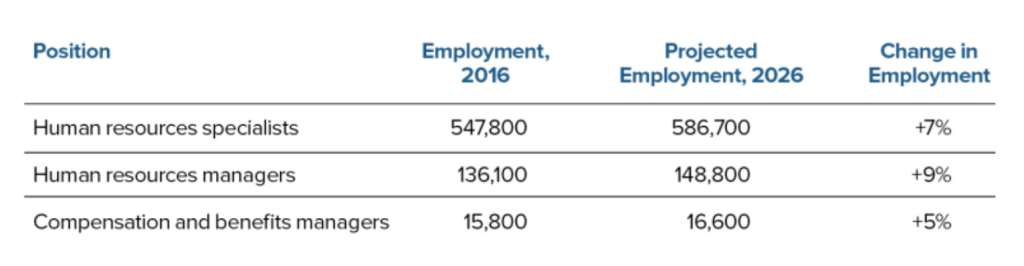
In the future, perhaps the essence of HR will be redefined as a labor consultant instead of human resources in the traditional sense (Susan, 2018), so the title of HR is no longer important. For example, many organizations abandon the title of human resources manager and use a title like director of talent-attraction strategy instead. This means that HR talent is more and more important for organizations. So, if you want to become an HR in the future, you might encounter quite a few competitors.
7-critical-strategies-to-prepare-for-the-future-of-hr.aspx
In future long digital transformation, the goals of HR roles must be clear. Among the four roles that HR may play as shown in the figure below, I think it is very important for a HR who wants to be among the top industries in the future to play a role as driver of business (Madan, 2018). Because technology is always updated very quickly, this year’s new technology may become obsolete in a few years, so HR who always embraces technology and promotes the development of the organization will certainly occupy a important place in the industry. Apart from embracing technology, different from the current situation, there will be an increase in temporary unions in future companies because of the feature of new era employee(Susan, 2018). Therefore, future HR should actively use digital technology knowledge to evaluate the automation of different jobs to play a better role of HR as driver of business.

Word Count: 797 words
References
ChatbotNews(2018). How Chatbots Can Be Utilized In HR. Retrieved from https://chatbotnewsdaily.com/how-chatbots-can-be-utilized-in-hr-2b96f9c928a6
Dean, C. (2018). How HR can make a difference: Dean Carter, CHRO at Patagonia. Retrieved from https://www.qualtrics.com/blog/hr-can-make-difference-dean-carter/
Erica, V. et al. (2017). Digital HR: Platforms, people, and work. Retrieved from https://www2.deloitte.com/us/en/insights/focus/human-capital-trends/2017/digital-transformation-in-hr.html
Madan, P. (2018). 4 Roles for HR in Digital Transformation. Retrieved from https://www.knolskape.com/blog-4-roles-for-hr-in-digital-transformation/
Michael, S. et al. (2019). The future of performance management is more data-driven, more flexible, more continuous, and more development-oriented. Retrieved from https://sloanreview.mit.edu/projects/performance-managements-digital-shift/
Mili, B & Neel, G. (2018). Human resources in the age of automation. Retrieved from https://www.mckinsey.com/business-functions/organization/our-insights/the-organization-blog/human-resources-in-the-age-of-automation
Susan, M. (2018). HR 2025: 7 Critical Strategies to Prepare for the Future of HR. Retrieved from https://www.shrm.org/hr-today/news/hr-magazine/1118/pages/7-critical-strategies-to-prepare-for-the-future-of-hr.aspx
 Yingxuan Huang