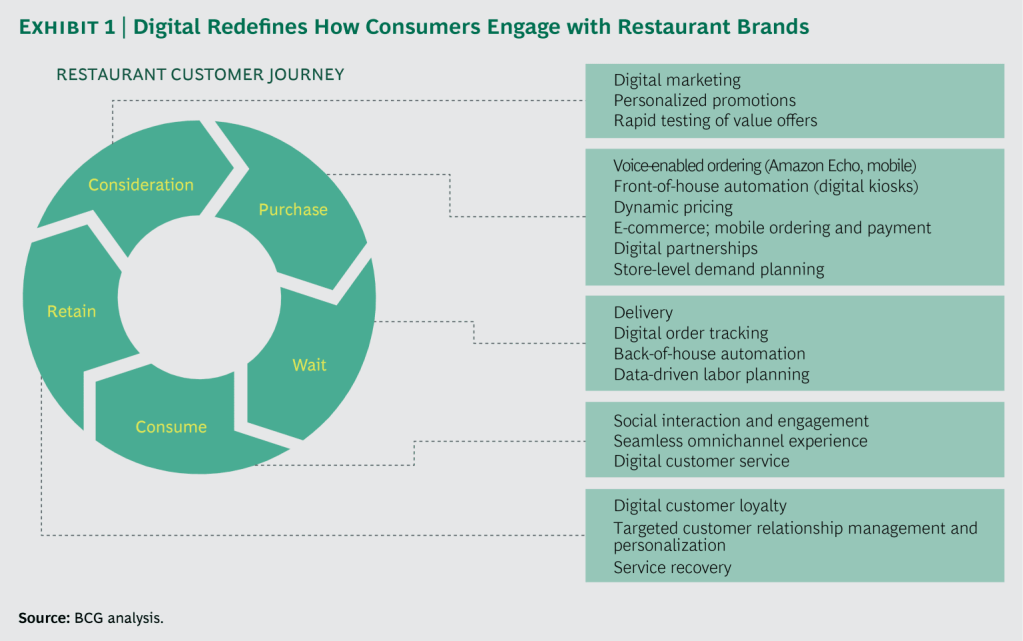
Gone are the traditional restaurant industry. With the advent of new technology, the focus of restaurants is gradually on the customer experience. For example, some restaurants offer customers a personalized gourmet night which is rather amazing. This special industry change means that the way of consumer engagement with brands and How brands interact with consumers at every stage of the customer experience has been redefined by digitalization. (Figure 1)
Can your restaurant keep up with this trend?
Some digital realities also clearly demonstrate the importance of digitalization in restaurant industry. In the BCG’s 2017 survey of the restaurant industry (Dylan, B. et al, 2017), more than one-third of restaurant users consider a digital source as most influential for discovering restaurants information. Besides, almost two-thirds of restaurant users are members of restaurant loyalty program, the consumer data gathered from these programs contributes to develop personalized offerings of restaurants.
Therefore, the response of these positive customers to the application of digital technology provides organizations with great opportunities at the strategic level. A Deloitte research (Deloitte, 2015) shows that maturing companies like McDonald’s are better at applying digital technologies to achieve strategic ends. Almost 90% of respondents believe that digital strategies will guide business transformation such as improving innovation and decision making.
Let’s delve deeper into how McDonald’s applies digital technology to business strategy.
After the launch of Apple Pay in the United States in 2014, McDonald’s became one of the first retailers to use the technology. (Christine, 2014) Apple pay provide an easy, secure and private way for customers to shop, which delivers an enhanced guest experience to customers.
In the same year, apart from digital payment methods, McDonald’s implemented digital self-service ordering kiosks in select locations. Danny’s research (2018), he mentioned that kiosks positively impact restaurant benefits / ROI such as improve the sales of the high margin menu items.
Above two digital strategies implemented by McDonald’s in 2014 proved that the replacement of traditional service pattern in the restaurant industry is inevitable, as customers increasingly enjoy automated services to help them reduce the hassles of the consumption process, such as keep flipping through paper menus, etc.
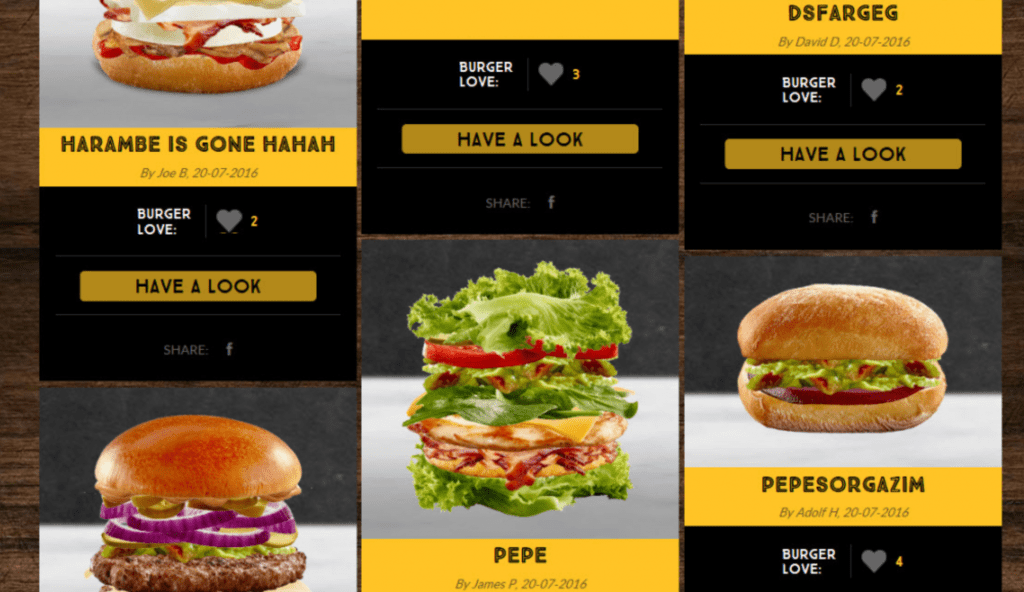
Interestingly, also in 2014, to cater to changing consumer tastes, McDonald’s developed a new digital strategy: The ‘Create Your Taste’ restaurant. (Figure 2) This digital strategy’ s main target was to attract people to make their own burger online using our custom made burger engine, share their personalized burger on their social media, which plays a role as ‘snowball effect’ to attract more people who think McDonald’s is not for them. Finally, this strategy achieved a big success that over 500,000 burgers created on McDonald’s website and more customers tried the new Create Your Taste menu.
The success of the campaign can also be suggested by Daniel’s arguments. (2019) He believes that creating personal experience at scale can increase customer satisfaction.
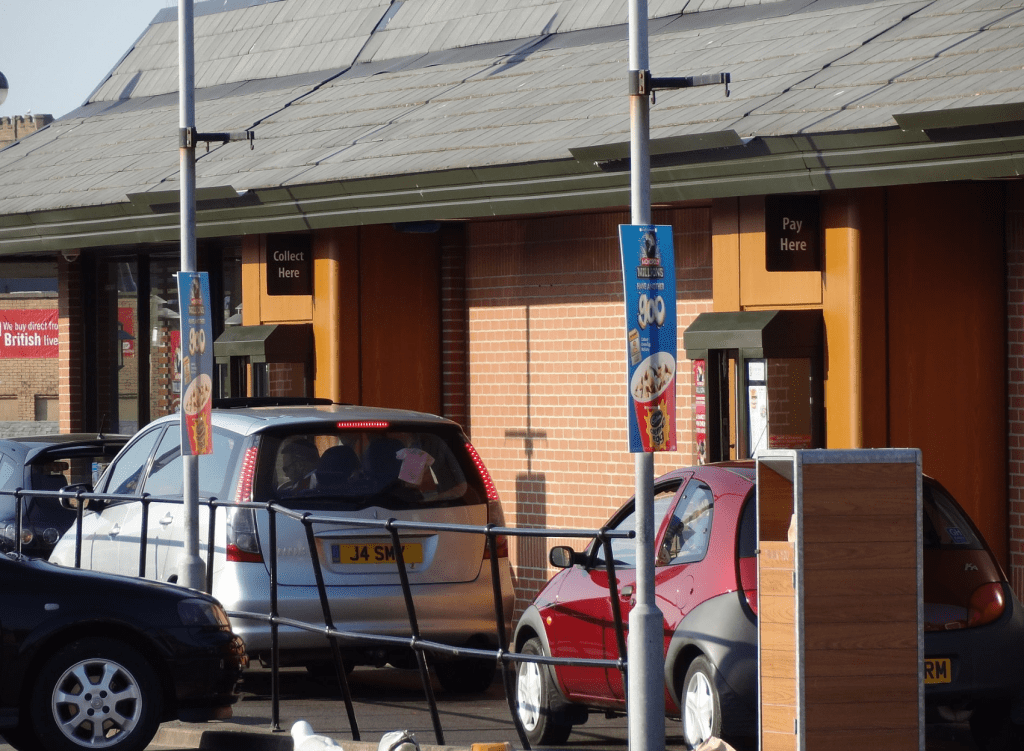
However, in the McDonald’s 2015 market survey, it shows that restaurant sales have been declining over the past five years. Particularly, in competition with Burger King, in November of 2015 the sales were down 4.6% on a year earlier. (Economist, 2015) Therefore, In 2016, McDonald’s launched the Drive-thru service which can provide voice order function to enable customers to complete their order in the car. (Figure 3)
Below is a short video about how to buy food at MacDonald’s Drive-thru.
Since then, improvements in restaurant automation and faster delivery have enabled McDonald’s to resume business growth. In a 2017 research, McDonald’s share price growth ranks ahead of almost all its rivals (Chase, 2017). In addition, the through train business accounts for 70% of total sales in the United States, which shows that people like the convenience brought by artificial intelligence, and also provides McDonald’s future strategic direction. In 2019, Macdonald’s acquired Dynamic Yields company to use their decision-logic technology to create drive-through menus tailored to its customers based on anything from time to day to weather and geo-trends.
To sum up, McDonald’s has been using new technologies to develop defensive strategies to respond to strong competitors in the market at every stage of business development.Obviously, personalized services supported by artificial intelligence technology are the general trend, and McDonald’s is perfect in this regard. However, will tech in restaurant industry last?
In the next stage of McDonald’s, I think maybe the organization should focus on technology while integrating strategy, because only targeted integration of digital technology and business can better control the changing market. As mentioned by Amelia (2020), McDonald’s is building a team targeted on digital customer engagement, which can drive their sales growth.
Word Count: 787 words
Reference
Amelia, L. (2020). McDonald’s creates digital customer engagement team as part of its tech push. Retrieved from https://www.cnbc.com/2020/01/08/mcdonalds-creates-digital-customer-engagement-team-as-part-of-its-tech-push.html
Chase, P. (2017). Americans won’t wait more than four minutes for a slightly less disgusting hamburger. Retrieved from https://qz.com/1010525/mcdonalds-mcd-fresh-beef-burgers-are-good-but-take-too-long-to-make/
Christine, K. (2014). McDonald’s, Panera, Starbucks Among First Adopters Of Apple Pay. Retrieved from https://www.hospitalityleaderonline.com/doc/mcdonald-s-panera-starbucks-among-first-adopters-of-apple-pay-0001
Daniel, N. (2019). AI And Personalization Transforming An Unlikely Industry: Fast Food. Forbes. Retrieved from https://www.forbes.com/sites/danielnewman/2019/04/23/ai-and-personalization-transforming-an-unlikely-industry-fast-food/#69d754ab3757
Danny, K. (2018). Study: Kiosk Demand on the Rise in Quick Service. Retrieved from https://www.qsrmagazine.com/technology/study-kiosk-demand-rise-quick-service
Deloitte. (2015). Strategy, not technology, drives digital transformation. Retrieved from https://www2.deloitte.com/us/en/insights/topics/digital-transformation/digital-transformation-strategy-digitally-mature.html
Dylan, B. et al (2017). The New Digital Reality for Restaurants. BCG. Retrieved from https://www.bcg.com/publications/2017/technology-value-creation-strategy-new-digital-reality-restaurants.aspx
Economist. (2015). When the chips are down. Retrieved from https://www.economist.com/business/2015/01/08/when-the-chips-are-down
 Yingxuan Huang