做自己,因为别人都在做自己。
– Oscar Wilde
这是我新博客的第一篇文章。我刚开始写这个新博客,因此请继续关注。在下方订阅,以便在我更新新文章时您会收到通知。
做自己,因为别人都在做自己。
– Oscar Wilde
这是我新博客的第一篇文章。我刚开始写这个新博客,因此请继续关注。在下方订阅,以便在我更新新文章时您会收到通知。
Before 11 weeks, I started my digital journey. In this period, I gained a lot of cutting-edge knowledge and learning methods, which will also help me a lot in my marketing major. In this blog I will show my whole reflection on my journey through this module.

Take the first blog I wrote as an example to introduce my gains in blogging. The requirement for the first blog was to choose a job role to analyze its changes from past to future.
After I read the second article in the MOOC learning platform (Figure 1): Changing times, changing roles. I learned that any technological reform that promotes social processes is driven by people’s needs, which also causes the change of daily routines in different job roles. Therefore, this article help me to build a critical analysis of role changes at different levels: the needs (of employees, employers or companies) level and the social level.
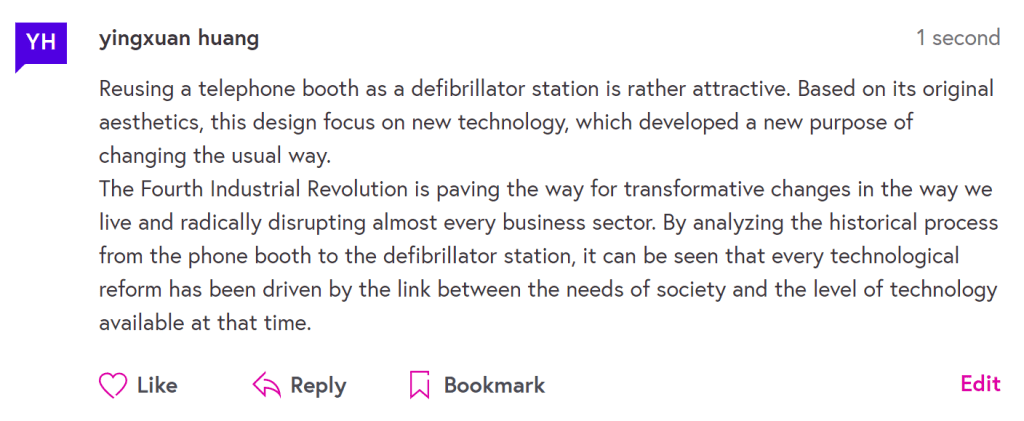
Apart from authoritative online resources like MOOC, I also need to consult numerous blogs and web pages to find evidence to support my point. At first I didn’t know how to tell the validity of the network resources, but gladly that in the second week of the module, I learned to distinguish the quality of the article through Evaluating Information Sources tutorial.
This tutorial stimulated my interest in collecting information on the Internet, so I finded a website in my spare time: Really Simple Syndication (RSS) (Wikipedia, 2020), which helps me filter out invalid information and improve the efficiency of obtaining information.
After completing my first blog about digital HR with the effective information I collected, I gained a lot of insights on digital transformation, so I contributed to the discussion in week 7. (Figure 2)
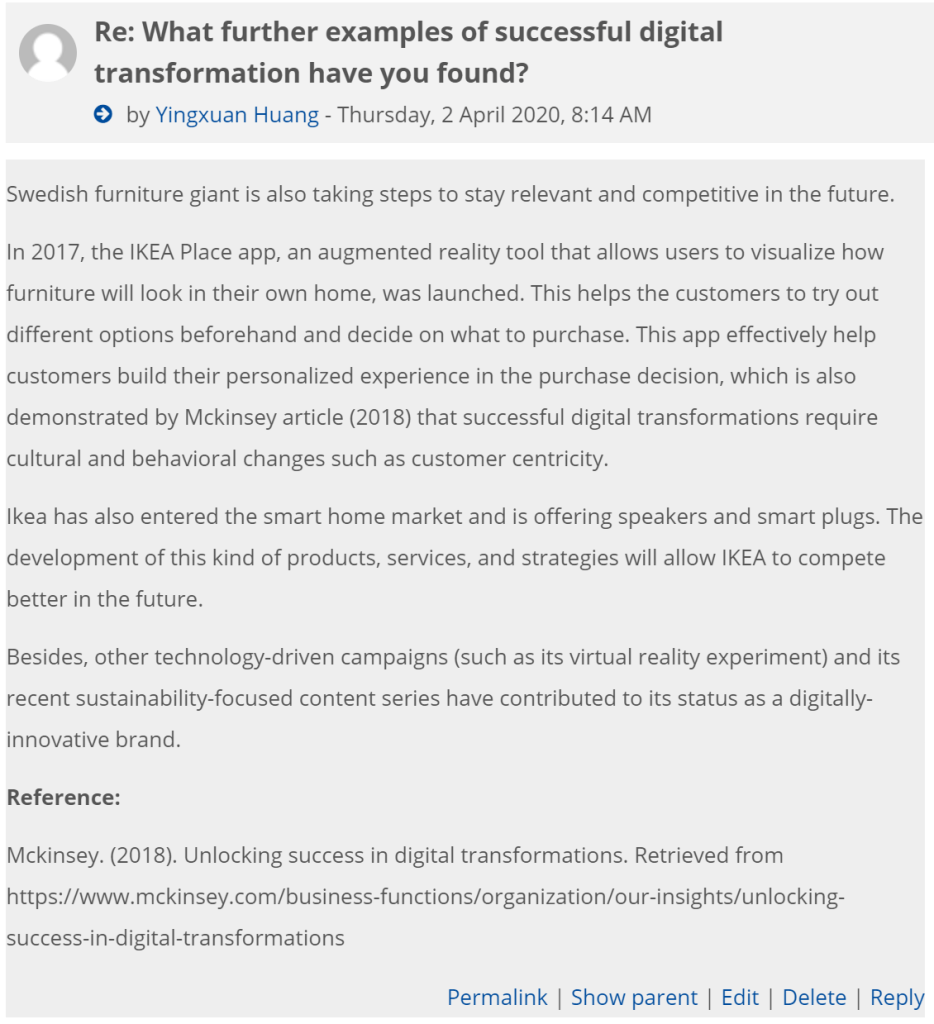
After writing two blogs, I found that I became more and more confident to my views. Apart from participating in discussions in ELE, I also post some comments on the blogs of my peers.
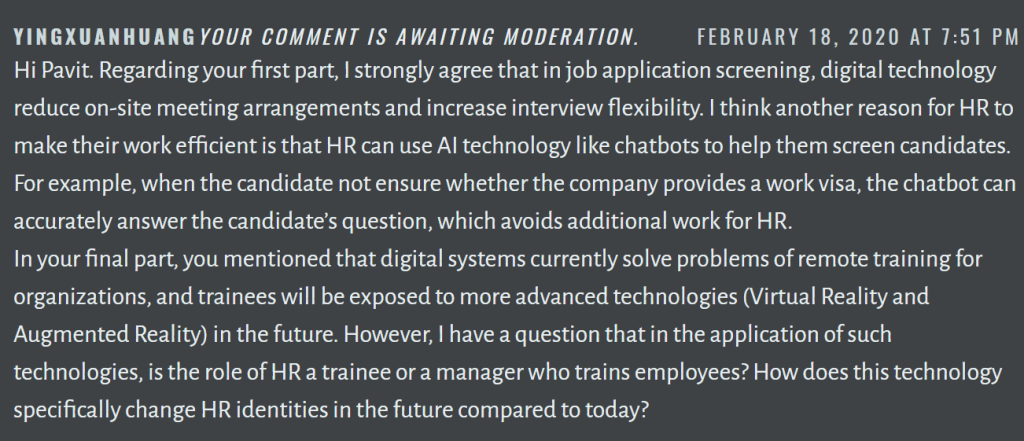


From the beginning of knowledge input in ELE, to the integration of MOOC and network resources, to the construction of my own knowledge framework to complete blogs (knowledge output), and finally to share my learning results through participation in discussions. It can be seen that BEMM129 module helped me build a complete learning system.
Now, I intend to continue this journey. Below is a short video about my future plan.
Word count: 399
Wikipedia. (2020). RSS. Retrieved from https://en.wikipedia.org/wiki/RSS
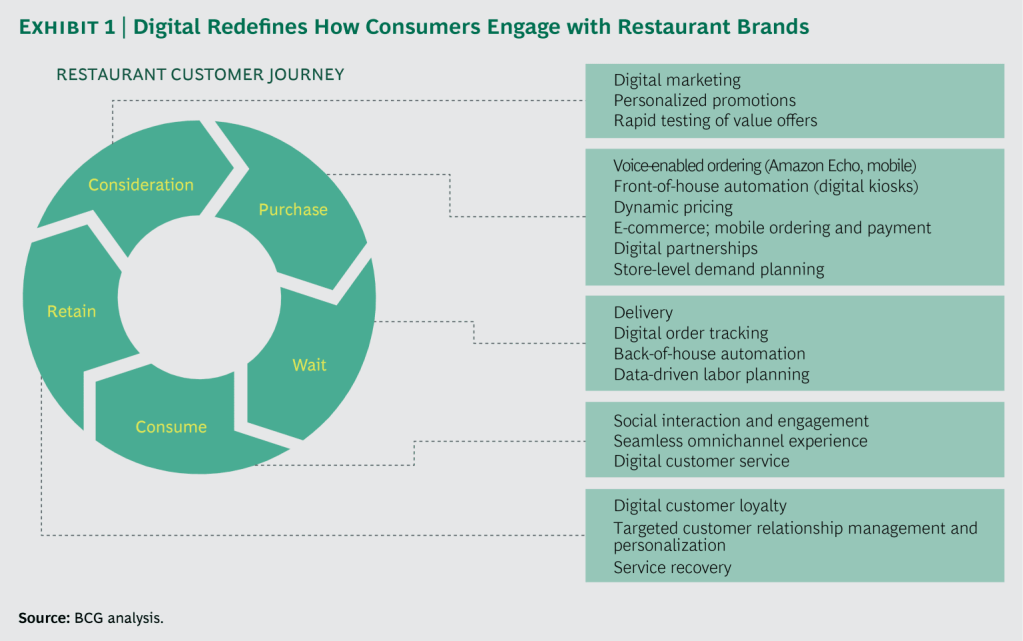
Gone are the traditional restaurant industry. With the advent of new technology, the focus of restaurants is gradually on the customer experience. For example, some restaurants offer customers a personalized gourmet night which is rather amazing. This special industry change means that the way of consumer engagement with brands and How brands interact with consumers at every stage of the customer experience has been redefined by digitalization. (Figure 1)
Can your restaurant keep up with this trend?
Some digital realities also clearly demonstrate the importance of digitalization in restaurant industry. In the BCG’s 2017 survey of the restaurant industry (Dylan, B. et al, 2017), more than one-third of restaurant users consider a digital source as most influential for discovering restaurants information. Besides, almost two-thirds of restaurant users are members of restaurant loyalty program, the consumer data gathered from these programs contributes to develop personalized offerings of restaurants.
Therefore, the response of these positive customers to the application of digital technology provides organizations with great opportunities at the strategic level. A Deloitte research (Deloitte, 2015) shows that maturing companies like McDonald’s are better at applying digital technologies to achieve strategic ends. Almost 90% of respondents believe that digital strategies will guide business transformation such as improving innovation and decision making.
Let’s delve deeper into how McDonald’s applies digital technology to business strategy.
After the launch of Apple Pay in the United States in 2014, McDonald’s became one of the first retailers to use the technology. (Christine, 2014) Apple pay provide an easy, secure and private way for customers to shop, which delivers an enhanced guest experience to customers.
In the same year, apart from digital payment methods, McDonald’s implemented digital self-service ordering kiosks in select locations. Danny’s research (2018), he mentioned that kiosks positively impact restaurant benefits / ROI such as improve the sales of the high margin menu items.
Above two digital strategies implemented by McDonald’s in 2014 proved that the replacement of traditional service pattern in the restaurant industry is inevitable, as customers increasingly enjoy automated services to help them reduce the hassles of the consumption process, such as keep flipping through paper menus, etc.
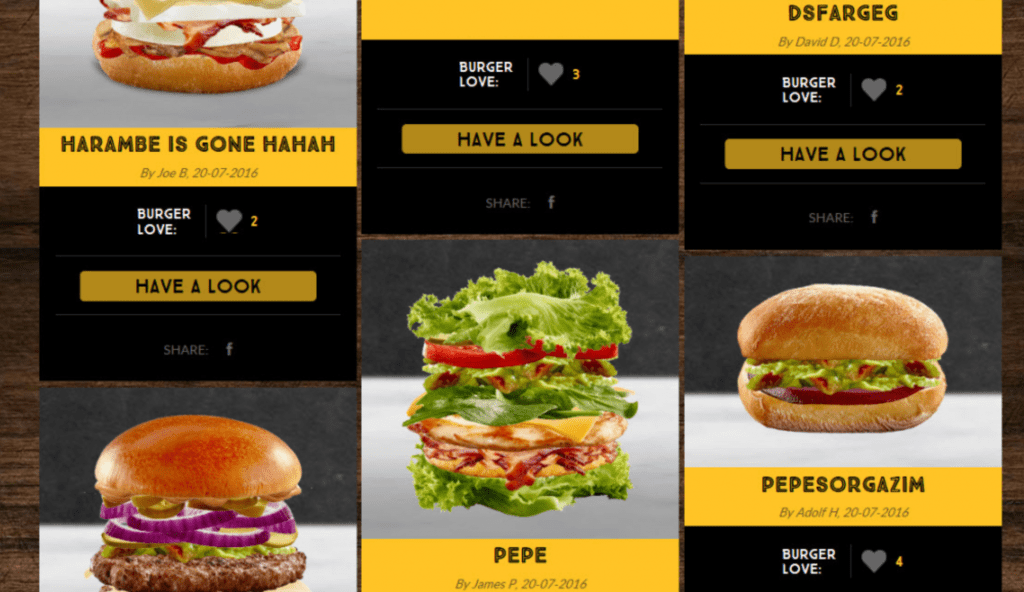
Interestingly, also in 2014, to cater to changing consumer tastes, McDonald’s developed a new digital strategy: The ‘Create Your Taste’ restaurant. (Figure 2) This digital strategy’ s main target was to attract people to make their own burger online using our custom made burger engine, share their personalized burger on their social media, which plays a role as ‘snowball effect’ to attract more people who think McDonald’s is not for them. Finally, this strategy achieved a big success that over 500,000 burgers created on McDonald’s website and more customers tried the new Create Your Taste menu.
The success of the campaign can also be suggested by Daniel’s arguments. (2019) He believes that creating personal experience at scale can increase customer satisfaction.
However, in the McDonald’s 2015 market survey, it shows that restaurant sales have been declining over the past five years. Particularly, in competition with Burger King, in November of 2015 the sales were down 4.6% on a year earlier. (Economist, 2015) Therefore, In 2016, McDonald’s launched the Drive-thru service which can provide voice order function to enable customers to complete their order in the car. (Figure 3)

Below is a short video about how to buy food at MacDonald’s Drive-thru.
Since then, improvements in restaurant automation and faster delivery have enabled McDonald’s to resume business growth. In a 2017 research, McDonald’s share price growth ranks ahead of almost all its rivals (Chase, 2017). In addition, the through train business accounts for 70% of total sales in the United States, which shows that people like the convenience brought by artificial intelligence, and also provides McDonald’s future strategic direction. In 2019, Macdonald’s acquired Dynamic Yields company to use their decision-logic technology to create drive-through menus tailored to its customers based on anything from time to day to weather and geo-trends.
To sum up, McDonald’s has been using new technologies to develop defensive strategies to respond to strong competitors in the market at every stage of business development.Obviously, personalized services supported by artificial intelligence technology are the general trend, and McDonald’s is perfect in this regard. However, will tech in restaurant industry last?
In the next stage of McDonald’s, I think maybe the organization should focus on technology while integrating strategy, because only targeted integration of digital technology and business can better control the changing market. As mentioned by Amelia (2020), McDonald’s is building a team targeted on digital customer engagement, which can drive their sales growth.
Word Count: 787 words
Amelia, L. (2020). McDonald’s creates digital customer engagement team as part of its tech push. Retrieved from https://www.cnbc.com/2020/01/08/mcdonalds-creates-digital-customer-engagement-team-as-part-of-its-tech-push.html
Chase, P. (2017). Americans won’t wait more than four minutes for a slightly less disgusting hamburger. Retrieved from https://qz.com/1010525/mcdonalds-mcd-fresh-beef-burgers-are-good-but-take-too-long-to-make/
Christine, K. (2014). McDonald’s, Panera, Starbucks Among First Adopters Of Apple Pay. Retrieved from https://www.hospitalityleaderonline.com/doc/mcdonald-s-panera-starbucks-among-first-adopters-of-apple-pay-0001
Daniel, N. (2019). AI And Personalization Transforming An Unlikely Industry: Fast Food. Forbes. Retrieved from https://www.forbes.com/sites/danielnewman/2019/04/23/ai-and-personalization-transforming-an-unlikely-industry-fast-food/#69d754ab3757
Danny, K. (2018). Study: Kiosk Demand on the Rise in Quick Service. Retrieved from https://www.qsrmagazine.com/technology/study-kiosk-demand-rise-quick-service
Deloitte. (2015). Strategy, not technology, drives digital transformation. Retrieved from https://www2.deloitte.com/us/en/insights/topics/digital-transformation/digital-transformation-strategy-digitally-mature.html
Dylan, B. et al (2017). The New Digital Reality for Restaurants. BCG. Retrieved from https://www.bcg.com/publications/2017/technology-value-creation-strategy-new-digital-reality-restaurants.aspx
Economist. (2015). When the chips are down. Retrieved from https://www.economist.com/business/2015/01/08/when-the-chips-are-down
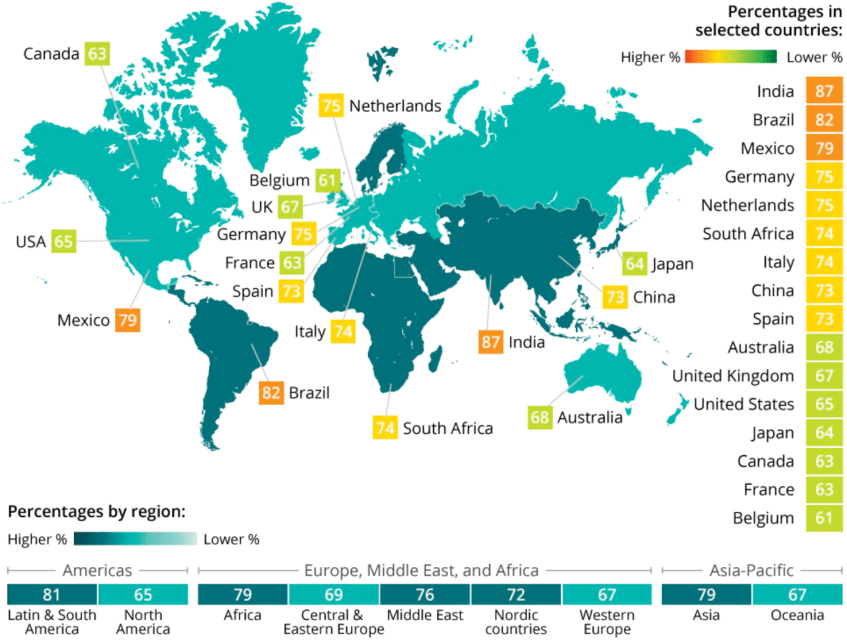
In their related article of 2017 Global Human Capital Trends, Deloitte outlines that in 16 countries surveyed, the percentage of respondents who rated digital HR trends as important or very important ranged from a minimum of 61% to a maximum of 87%. This is because digital disruption helps HR have higher data quality and production efficiency and greatly reduce communication obstacles at work.
in the era of industry 4.0, the goal of human resource managers has become helping organizations ‘be digital’ rather than just ‘do digital’, which means, in addition to establishing digitizing human resources platforms, organizations must also focus on the development of digital workforces and digital workplaces (such as Slack, Microsoft Teams, and many others)(Erica et al, 2017). Such digital consistency can make communication more efficient and systematic between people and people, people and digitalization and digitalization and digitalization. Besides, various new digital technologies like Chatbots gradually make the process of human resource management more intelligent. All these trends mean that the routine business of human resource managers has changed dramatically.
Taking the corporate recruitment process as an example, below is a short video about how HR roles have been changed.
One of the most common changes in the recruitment process is HR’s shift from receiving paper resumes from traditional times to acquiring electric resumes via recruitment digital platforms such as LinkedIn.
Besides, the development of AI has made many elements of the recruitment process tend to be automated. On the one hand, it has improved the efficiency of the recruitment process. On the other hand, it has drove HR to do more value-added work, thereby increasing the potential productivity value (Mili & Neel, 2018). As for organizations, automation in recruitment provides them consistent process execution.
Chatbots help HR respond more quickly to candidates’ questions and get more accurate feedback(ChatbotNews, 2018). For example, by asking international candidates if they require work visa sponsorship, chatbots can filter out those who do not meet corporate conditions. This shows that chatbots save the time of HR dealing with simple and repetitive work, which can give them more energy to efficiently evaluate the resumes of candidates after the basic screening.
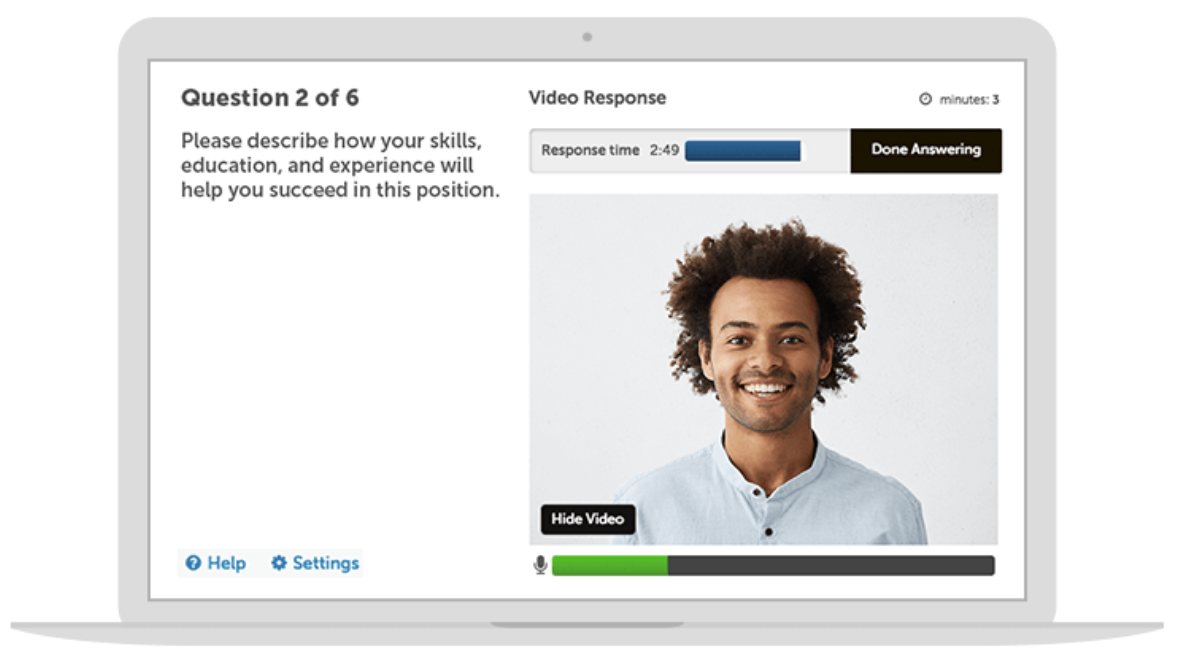
Another interesting HR strategy is video interviews. Unlike traditional face-to-face interviews, HR only needs to record interview questions in advance and evaluate videos at a uniform time using designed and fixed answer criteria. Besides, AI technology scores candidates by identifying their eye contact to the camera. For large companies, they receive thousands or even tens of thousands of resumes each year, while automation technology makes HR screening easier and saves them time.
Another major aspect of digital technology to improve human resource process is performance management, because traditional performance management is outdated in the digital economy. The essence of HR’s function is to provide technology for managing performance, but due to digital disruption, the relationship between PM and digital technology is inseparable (Michael et al, 2019), which leads that HR’s professionalism in digital business and technology to directly affect their career development. Dean Carter(2018), chief people officer at Patagonia — argue that if human resource managers do not have the ability to strategically consider performance management through the application of digital technology, they may be marginalized by this era.
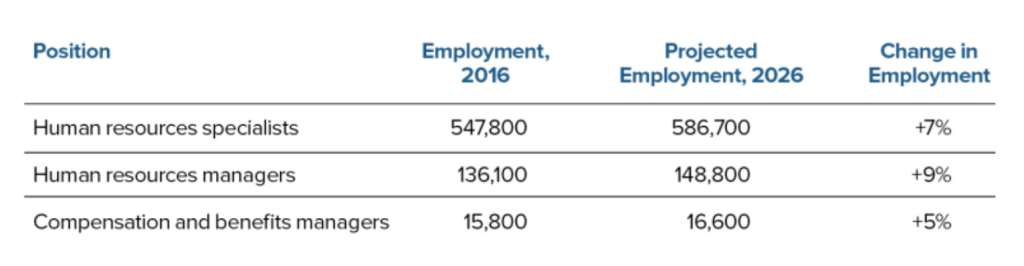
In the future, perhaps the essence of HR will be redefined as a labor consultant instead of human resources in the traditional sense (Susan, 2018), so the title of HR is no longer important. For example, many organizations abandon the title of human resources manager and use a title like director of talent-attraction strategy instead. This means that HR talent is more and more important for organizations. So, if you want to become an HR in the future, you might encounter quite a few competitors.
In future long digital transformation, the goals of HR roles must be clear. Among the four roles that HR may play as shown in the figure below, I think it is very important for a HR who wants to be among the top industries in the future to play a role as driver of business (Madan, 2018). Because technology is always updated very quickly, this year’s new technology may become obsolete in a few years, so HR who always embraces technology and promotes the development of the organization will certainly occupy a important place in the industry. Apart from embracing technology, different from the current situation, there will be an increase in temporary unions in future companies because of the feature of new era employee(Susan, 2018). Therefore, future HR should actively use digital technology knowledge to evaluate the automation of different jobs to play a better role of HR as driver of business.
Word Count: 797 words
ChatbotNews(2018). How Chatbots Can Be Utilized In HR. Retrieved from https://chatbotnewsdaily.com/how-chatbots-can-be-utilized-in-hr-2b96f9c928a6
Dean, C. (2018). How HR can make a difference: Dean Carter, CHRO at Patagonia. Retrieved from https://www.qualtrics.com/blog/hr-can-make-difference-dean-carter/
Erica, V. et al. (2017). Digital HR: Platforms, people, and work. Retrieved from https://www2.deloitte.com/us/en/insights/focus/human-capital-trends/2017/digital-transformation-in-hr.html
Madan, P. (2018). 4 Roles for HR in Digital Transformation. Retrieved from https://www.knolskape.com/blog-4-roles-for-hr-in-digital-transformation/
Michael, S. et al. (2019). The future of performance management is more data-driven, more flexible, more continuous, and more development-oriented. Retrieved from https://sloanreview.mit.edu/projects/performance-managements-digital-shift/
Mili, B & Neel, G. (2018). Human resources in the age of automation. Retrieved from https://www.mckinsey.com/business-functions/organization/our-insights/the-organization-blog/human-resources-in-the-age-of-automation
Susan, M. (2018). HR 2025: 7 Critical Strategies to Prepare for the Future of HR. Retrieved from https://www.shrm.org/hr-today/news/hr-magazine/1118/pages/7-critical-strategies-to-prepare-for-the-future-of-hr.aspx
这是一篇示例文章,最初作为 Blogging University 的组成部分发布。报名参加我们十个项目中的其中一个,立即开始撰写您的博客。
您今天要发布一篇文章。不必担心您的博客的外观。如果您还没有给博客命名或是感到不知所措,也不必担心。只需点击“新文章”按钮,告诉我们您来此处的原因。
为什么要这样做?
文章可短可长,可以是对您的生活的个性化介绍或是博客宗旨说明,也可以是对未来的宣言或是对希望发布的内容类型的简要概述。
为了帮助您开始撰写,不妨思考以下几个问题:
您并非一定要受此限制,博客的一个奇妙之处在于,随着我们学习、成长和与他人互动,它们是会不断演变的,不过如果知道从何处入手以及为何开始,这将会颇有益处,并且明确您的目标可能会激发您写其他一些文章的灵感。
不知道如何开始?只需写下您脑海中闪现的第一件事即可。Anne Lamott 是一位作家,大家都喜欢她写的书。她指出,你要允许自己写出“蹩脚的初稿”。Anne 提出了一个很好的观点,先开始写,之后再去考虑如何编辑。
在您准备发布时,给您的文章贴上三到五个标签来描述您博客的关注点 – 写作、摄影、小说、育儿、美食、汽车、电影、体育等。这些标签将帮助关注您话题的人在阅读器中找到您。确保添加“zerotohero”标签,这样其他新博主也可以找到您。


 Yingxuan Huang